Our Manifesto
Inevitable & overlooked.
We are not witnessing the adoption of a new technology. We are witnessing the restructuring of how intelligence moves through the world — how decisions get made, how workflows get executed, how physical systems get operated. This transformation is not unfolding in sequence. It is happening simultaneously across three dimensions, each reinforcing and depending on the others.
The through-line is a single shift: from systems that complete tasks to systems that deliver outcomes. The companies that understand all three dimensions — and build at their intersection — will define the next era of enterprise value.
The Enterprise Dimension
Almost every large organization — banking, insurance, legal services, logistics, software — has built its value on human-delivered cognitive labor at scale. The people, the processes, the org structures: all optimized for a world where intelligence was scarce and expensive.
That assumption is breaking. AI is compressing adoption cycles and competitive response times in ways that make traditional moats fragile. The transition from human-intensive to human-augmented is not a feature upgrade — it is an architectural change. Workflows, headcount, and business models are being rebuilt around what AI can now do reliably, at scale, and at a fraction of the cost of human execution.
The companies that navigate this transition — and the ones that enable it — represent one of the most significant near-term investment opportunities in enterprise software.
The Intelligence Dimension
Agentic systems — AI that perceives, reasons, plans, and executes across complex multi-step workflows without continuous human direction — are entering the enterprise. The shift is from AI that assists decisions to AI that makes them: within defined boundaries, with accountability built in, and with the ability to learn from outcomes rather than just complete tasks.
This shift matters most in the industries where the stakes are highest — regulated environments, enterprise operations, healthcare, financial services, logistics, industrial control. Precisely the environments where AI has been slowest to penetrate, because trust must be earned through reliability, not promised through capability.
Every platform era produces two kinds of winners: the applications, and the infrastructure that makes the platform deployable at scale. In the AI era, the infrastructure is the orchestration layer — the frameworks, pipelines, and systems that connect AI capability to the legacy infrastructure that still runs the world. Making AI actually work, reliably and safely, in the real world is harder than building the models themselves. Harder problems, solved well, create more enduring value.
The Physical Dimension
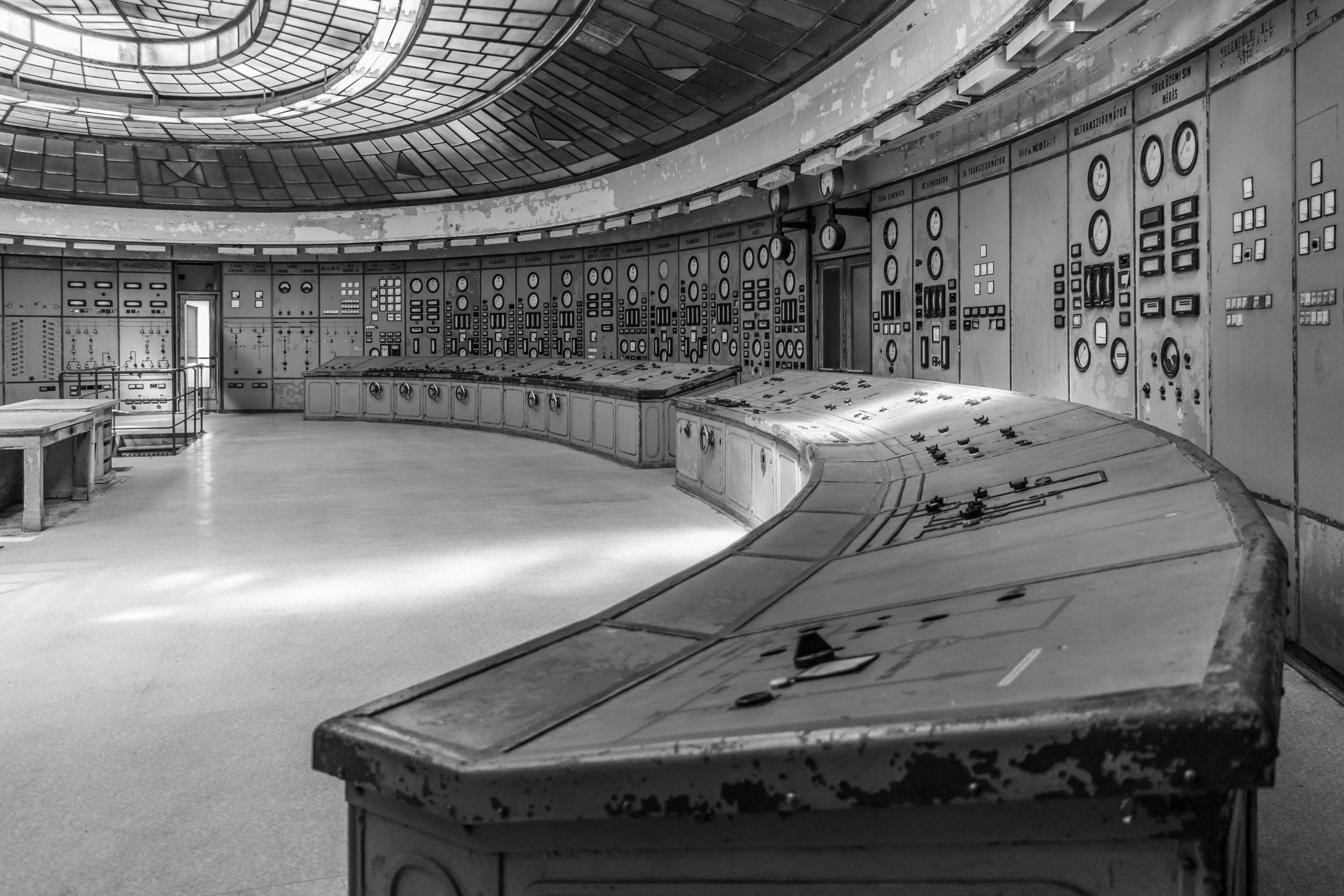
For twenty-five years, software transformed the industries that were easy to transform — media, communication, commerce. The ones built on information that could be digitised and moved at the speed of light. What comes next is different. Physical infrastructure, energy systems, supply chains, and industrial processes cannot simply be replaced with an app.
These markets are vast, entrenched, and at their tipping point. The companies that will define this era are neither pure software companies nor traditional industrial ones. They are something new — organisations that bring deep technological capability to bear on problems that have resisted change precisely because they are hard. The moat is not the code. It is the combination of code and context that only comes from founders who have lived inside these industries and decided to transform them anyway.
Horizon
As these three dimensions mature and converge, a new class of enterprise is becoming possible: organizations that are not merely AI-assisted, but AI-native. Built from the ground up around systems that perceive, reason, and act — at the level of the workflow, the operation, the supply chain, the physical asset. This is not a distant possibility. The foundational components are being assembled now, in the companies being built today.
This is a hypothesis. The timeline is uncertain and the path nonlinear. But it shapes how we think about the infrastructure bets we make today — and which foundational layers will matter most when that transition arrives.
Three dimensions.
One transformation.
The founders we back are the ones who see what others dismiss. The markets we choose are the ones that have resisted change the longest — and are therefore closest to their breaking point. The technologies we believe in are just beginning to show what they can do in the environments that matter most.
Inevitable & overlooked.
View Our Portfolio →